

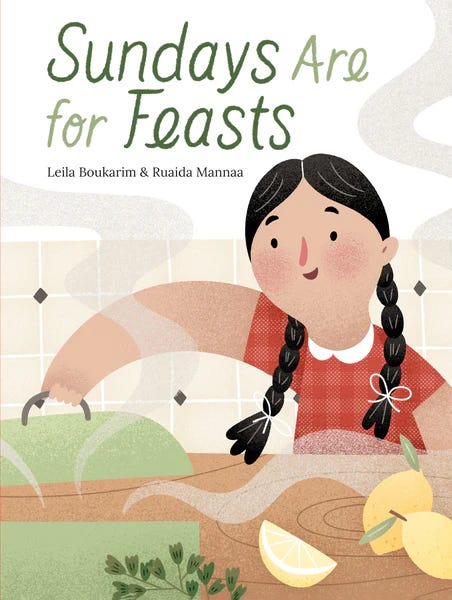
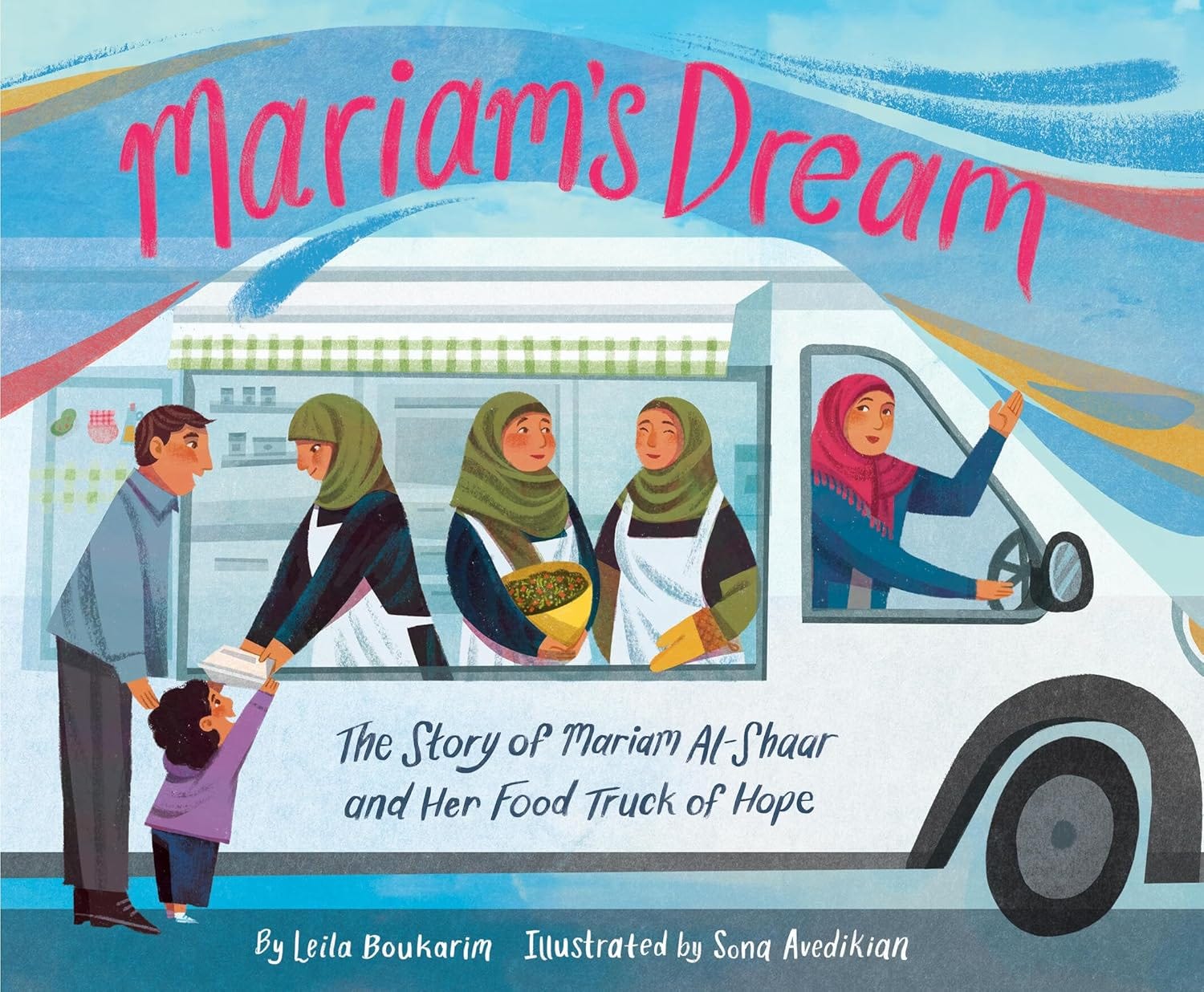
This spring saw the release of two new picture books by Leila Boukarim. Both are set in Lebanon. Both characters have aspirations involving food. Both seek a deeper sense of place and belonging. Given the similarities, I hoped to review both picture books with the same breath, but I found I could not.
Between these two narratives, there are many differences. One is fiction. The other is creative nonfiction. One character visits Lebanon freely every summer. The other is trapped in a human warehousing system, also known as a refugee camp. One belongs to a world in which children have rights and freedoms. The other exists without rights and freedoms, a “daughter of refugees—people who live between worlds.”
It is likely that these books were written before 2023, the year the political architecture of the former British Empire began to rattle and shake and crumble with a violent fragility not seen since WWII. The Anglosphere suffered an immediate moral defeat. Its political, educational, commercial, medical and spiritual institutions offered no resistance to senseless massacres of men, women, and children. And worse, English cultural institutions did everything possible to provide the weapons and the cover. Live-streamed genocide is now our primary cultural production.
While the Anglosphere persists with its killing spree, it feels wrong to write and review children’s books written in English. Is this a language and culture to which we should encourage children to bond?
I know Leila Boukarim will forgive me for these reflections. She is as aghast as I am over the Anglosphere’s tolerance for and complicity in heinous crimes and indignities.
A plague on all your houses. Or how about ten plagues and the release of all people?
Leila Boukarim’s Sundays Are for Feasts recalls the Anglosphere of a few years ago, in which diverse histories, locations, and identities were finally being treated with a degree of respect. It was an important stage of psychological growth for English. It is, after all, a global language thanks to the machinations of the former British Empire and American imperialism. Surely, it had to give up its ethnocentrism and become more like Arabic and Spanish, two languages with standards of hospitality. In the writing and editing of Sundays Are for Feasts, there was respect for the country of Lebanon, for its traditions, for its people, for its foods. But while the words and images were in print, the Anglosphere contributed to horrific forms of aggression against Lebanon, its history, and its people.
Mariam Dreams: The Story of Mariam Al-Shaar and Her Food Truck of Hope seems like the kind of children’s book we’ll all be writing and illustrating in the future. It’s the story of a young, Palestinian woman, who remains stateless and steadfast after multiple generations in Lebanon. The refugee camp she was born in suffices as a country. And even though her agency is constricted by a lack of human rights and dignity, she invents new possibilities for herself and her community. Why a food truck? Maybe because despite not having sources of income or countries to call home, the women of this tale still needed to put food on the table, still had to feed their children, still had to live despite not being afforded a life.
I fear this story is symbolic of what lies ahead for us writers and illustrators of children’s books. Despite the worsening state of the Anglosphere, now wholly unsuitable for children and human life, we will still feel compelled to create books to sustain the hopes and dreams of little ones. We will still put food on the table. Maybe even feasts. We will remember life before despair and labor to invent possibilities. But I pray to God, we will not convince children that a life without rights is the best they can hope for. To do so would be an unforgiveable betrayal and an act of submission to tyranny.
Wonderful reviews Evangelene, and congrats to Leila, Ruaida and Sona x