When I was little, it was often the food, not plot or characters, that engaged my attention in storybooks. What happened to Hansel and Gretel before they found the candy house? Don’t ask me. What happened to them after? Don’t care. I’m too busy imagining my very own candy house with marshmallow pillows, candy floss curtains, and peppermint lampposts. Charlie and the Chocolate Factory and James and the Giant Peach offered similarly tantalizing descriptions of food. Who wouldn’t love an enormous juicy peach that is also a cozy escape from the wickedness of the world? Then there was Beatrix Potter, whose little mice and bunnies scampered about illustrated gardens and pantries, stealing food.
All too often these storybook characters followed their noses and wound up in trouble. Children of my generation and older could relate. The best foods were for guests and adults, not kids. Straying into the kitchen for bite of something could land you in hot water. But these were the days of large single-income families living in small, inconvenient towns. The food had to last. And in storybooks as well as real life, it rarely did.
Marcel the Pastry Chef was a book with a different approach to food. Every night, Marcel baked oodles of pastries in the king’s kitchen while the castle-dwellers slept. And every night, he had to devour them to hide the evidence from the chef. It was heavenly to imagine so many pastries, filled with cream and chocolate, all being enjoyed by the main character just so he could stay out of trouble. Eventually, Marcel’s talent was discovered and he opened a pastry shop. Marcel’s love of food led to more people enjoying food and sharing the bounty. Who would have thought such happy endings were possible back then?
These days, more and more storybook characters have opportunity to eat joyfully. Perhaps it’s because we live in a time of abundance and convenience. Or perhaps it’s that global food cultures now influence the types of stories we tell about food in English. Recipe books aren’t a new thing by any means, but it’s taken a while for the culture and people behind the meals to be given due credit for their marvelous inventions. For far too long, recipes have been appropriative and inaccurate. So, even though I love all kinds of food, I’ve never been too fond of following a recipe. The tantalizing images and descriptions rarely become a reality, making you aware of the blurry line between fiction and nonfiction when you don’t have the cultural skills to pull something off. And who can tolerate those boring lists of steps and ingredients when hungry?
For these reasons and more, I was a trifle hesitant to read and review a recipe storybook for children. Would the recipes be crammed at the back or scattered here and there interrupting the story? Would they have lengthy, boring descriptions that ruin the fun of cooking—and reading? Would they trick children into believing that good food comes from glossy pages, not beloved family members?
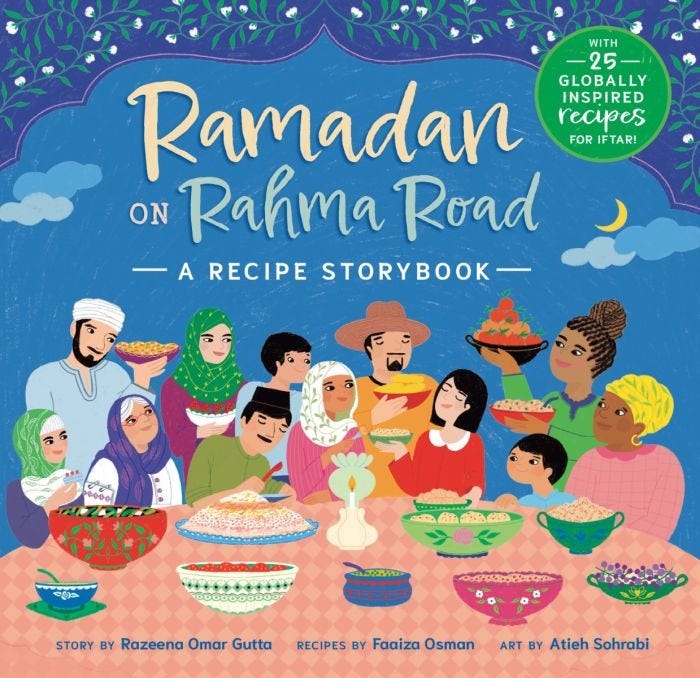
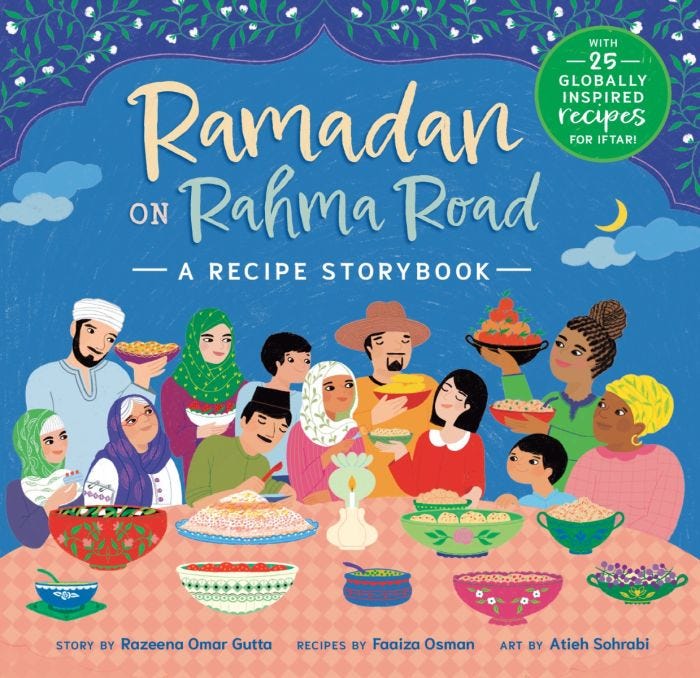
A book with 25 global recipes needs a strong theme to tie everything together into a single story for children. Luckily, the creators of this tale had one up their sleeves—Ramadan! It’s the time of year when Muslims around the world are sharing cultural dishes with friends and family in person and on social media. Everyone wants to know who’s cooking what and how it’s made. Every home is full of delicious smells when the sun goes down.
Ramadan on Rahma Road offers much more than recipes. First, there’s the visual feast for the senses in the colourful, decorative homes, clothing, and dishware. Islamic patterns decorate table cloths and kitchen spaces. Flowers and plants add beauty and warmth while cats and birds animate the scene. Next is the mouth-watering descriptions of beloved cultural foods, made from scratch by diverse characters. Each family’s story stretches into the recipes, making the directions personable and easy to follow. Stories introduce various languages and places, exposing the multiplicity of Muslims and the oneness of Islam. They also include subtle pieces of information about Ramadan and fasting, answering potential worries like what to do if you accidentally break your fast and is it okay to still exercise. Mostly, it’s an intimate glance at the lives of families in the hours before iftar, or breakfast.
Don’t take the national designation of recipes too seriously as some of the dishes might have originated elsewhere. For example, the Lebanese origins of Fatoush are uncontested, but it is a salad Palestinians love to eat during Ramadan. The levant region has an interconnected food culture, which a certain interloper is continually trying to steal. So beware the internet and the authority of google searches when it comes to Arab food. Just because Arab and Muslim culture is generous it doesn’t mean everything is up for grabs. Ahem, ahem.
On that topic, Gaza has been under siege for over a year, leading to a cruel and preventable man-made famine. Please look up the recipe book Tabkha. All proceeds of sales go to the Gazan chef and her family. The occupation has a history of assaulting Gaza during Ramadan, undoubtedly seeking to shake the foundations of faith along with every other foundation that sustains life in a society. May we direct our generosity where it is needed.
https://tabkhabook.com/products/tabkha-recipies-from-under-the-rubble